Volunteer Coral Conservation in the UK: How to Get Involved
From beach cleans and Seasearch dive surveys to aquarium volunteering and cold-water coral recording, here...

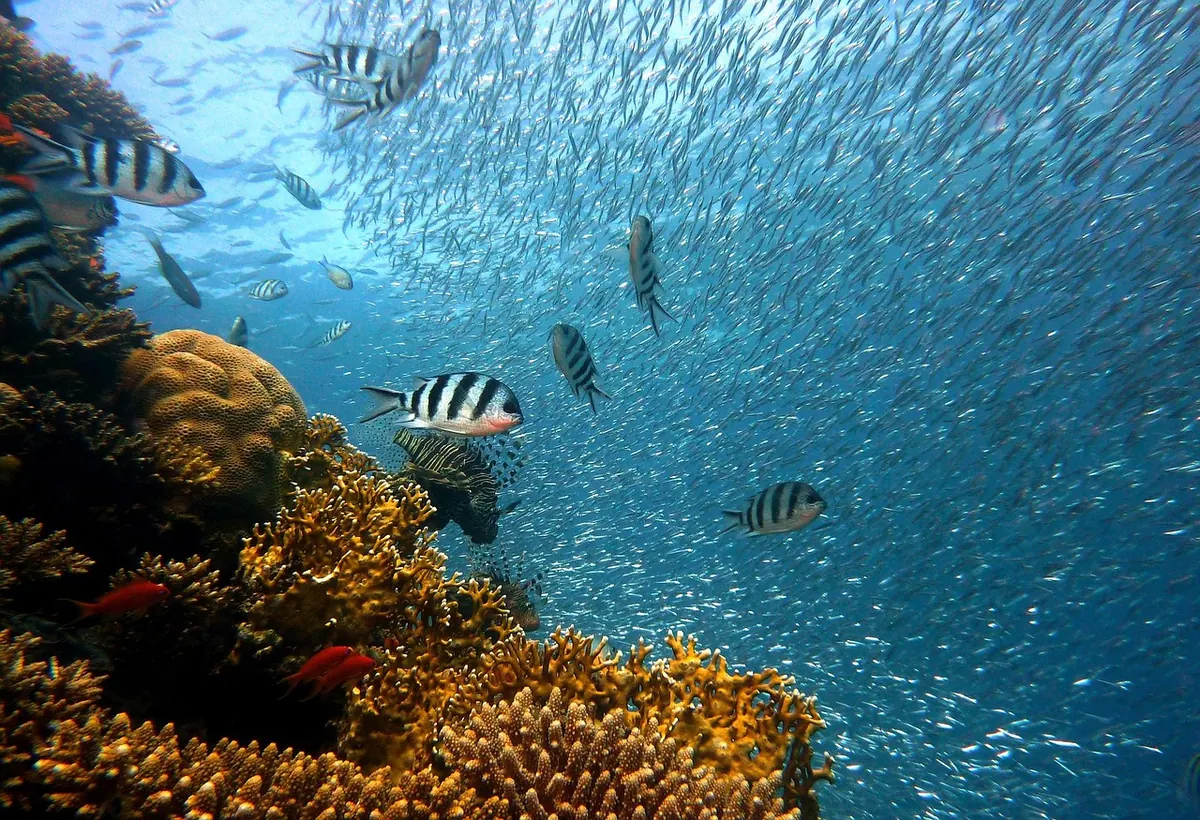
A healthy reef in March can be a riot of brown, olive and gold. Come back in September and the same patch may look as if someone has poured white paint over it. Nothing was added — something has been lost. Bleaching is one of the clearest signals that a reef is under pressure, and also one of the most misunderstood. A white coral is not automatically a dead coral, and a bleached reef is not automatically a lost one.
Reef-building corals are not one organism but a partnership. The coral animal — a polyp sitting in a cup of calcium carbonate it built itself — hosts microscopic algae called zooxanthellae inside its tissue. The algae photosynthesise, handing sugars and other energy-rich compounds to their host, and take shelter and nutrients in return. They are also what makes most corals look brown or gold.
When that partnership breaks down, the coral expels its algae. The tissue loses its colour and becomes translucent, so the white skeleton beneath shows through. That is bleaching.
The crucial point: a bleached coral is still alive. It is not dead, it is starving. Deprived of most of its energy supply, it survives on stored reserves and whatever it can catch from the water. If the stress passes, the algae return, the coral regains colour, and the reef carries on. If it does not, the coral dies — but that takes days to weeks, sometimes longer, and it is not inevitable.
Corals live close to their thermal limit already. A marine heatwave — water a degree or two above the local summer maximum, held for a week or more — is enough to break the partnership. It is the duration and the size of the anomaly that matter, not a single hot afternoon. Ocean heatwaves have become more frequent and longer-lasting, which is why bleaching is now a recurring event on many reefs rather than a rare one.
Heat rarely acts alone. Anything that already has the coral under strain lowers the temperature at which it bleaches:
Take the sediment, nutrients and fishing pressure out of the picture and the same heatwave does less damage. That is why local management matters even as the ocean warms.
Bleaching usually unfolds in a sequence rather than appearing overnight. Corals that are about to bleach often turn fluorescent first — vivid pinks, blues and purples, produced as a protective sunscreen by some species. Then they pale. Then they go bone white, so the corallite structure and polyp outlines are still visible through the tissue.
It helps to know what is not bleaching. Dead coral is quickly overgrown by turf and fleshy algae, so it looks fuzzy, grey, brown or slimy. White sand patches and pale rock are just sand and rock. If you are not sure, look at shape and detail: a bleached coral keeps its clean form, a dead one loses it.
Yes, often — but "recovery" means two very different things.
The first runs fast. Once the water cools, surviving corals take up algae again from the water or from their remaining stock, and colour can return within weeks to a few months. The second clock is slow. Rebuilding the reef itself — the branches, the plates, the nooks that shelter fish — takes years to decades, because coral growth is measured in centimetres. A branching coral might add several centimetres in a good year; a boulder coral far less.
Four things tend to matter most: how severe the heat was, how long it lasted, which species were affected, and what else is going on around the reef. Branching corals such as staghorn are often the first to bleach and the first to die; some massive and brain corals weather the same event with only partial paling. A reef that bleaches once, with a cool and quiet year afterwards, can come back strongly. A reef hit three summers in a row may not.
Recovery is not luck. Reefs bounce back faster when:
Repeated bleaching is what turns a bad year into a permanent change. Each event shaves a little more off the reef's ability to rebuild, and eventually the structure erodes into rubble.
Bleaching is grim to watch. But a bleached reef is a reef that is still there, and the choices made in the months after an event — about water quality, fish and the next heatwave — decide whether it stays that way.
Photo: joakant / Pixabay
From beach cleans and Seasearch dive surveys to aquarium volunteering and cold-water coral recording, here...
Rising carbon dioxide is making seawater less alkaline, which slows the growth of coral skeletons. Here's...
A practical beginner's guide to building a home reef tank that thrives while keeping pressure off wild reefs.